About Rob

Rob Bolton is an executive in the technology industry who has lived and worked across three continents—from his roots in Maryland to years spent in Europe and Asia before settling in the Washington, DC area. After publishing a business book, he discovered his true passion lay not in corporate strategy, but in storytelling.

Rob's works draw on a lifetime of encounters with fascinating people and the complex legacies they leave behind. Rob is hard at work on his next novel and remains committed to writing honest, character-driven fiction that explores the complexities of human relationships, moral ambiguity, and the difficult choices people make when pushed to their limits.

His work gravitates toward thrillers and stories that place flawed, compelling characters in challenging and often unpredictable situations.
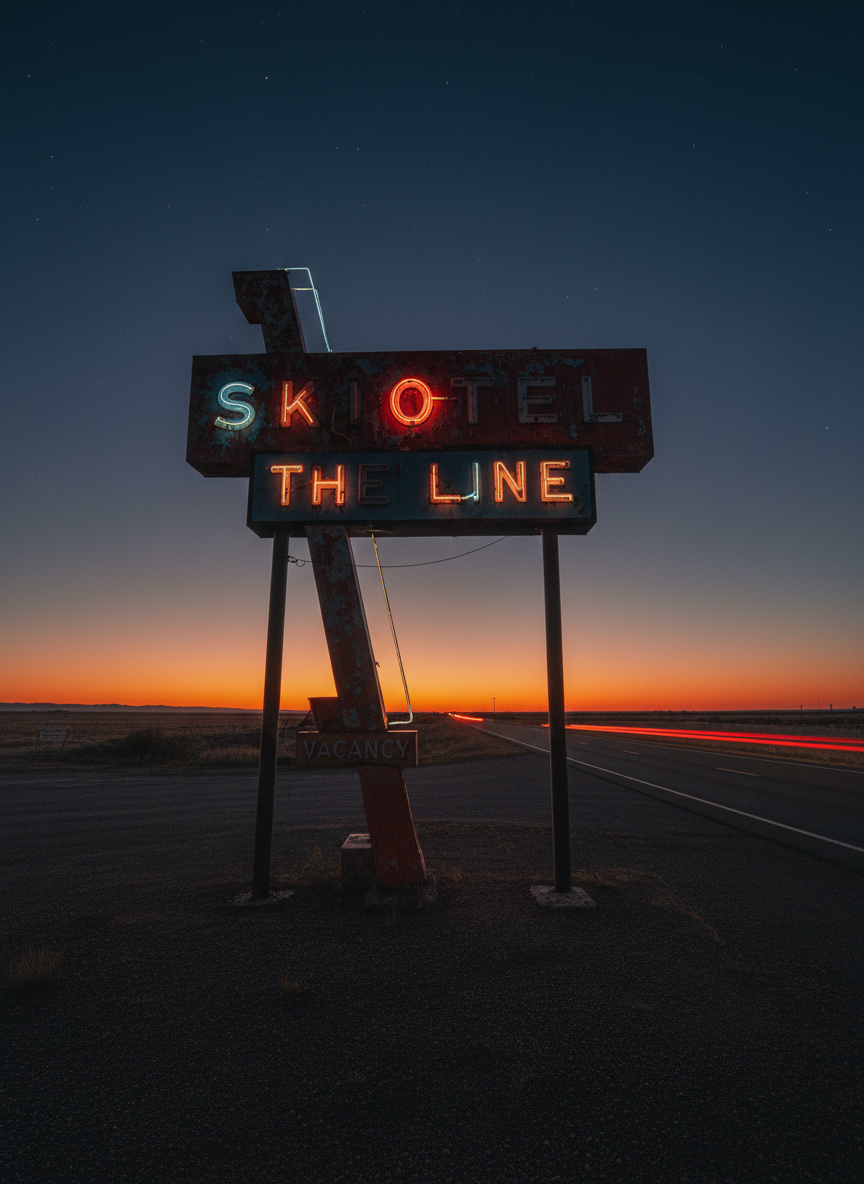

A lonely roadside motel sign standing at the edge of a two-lane highway at dusk, its retro neon tubing partially unlit so that only a few letters glow weakly, suggesting something “skirting the line” between functioning and failing. The sign’s chipped paint and rusted metal frame show years of wear. The horizon is painted with a deep orange-to-indigo gradient, and the first stars are becoming visible. Long-exposure car light trails streak faintly along the road in the distance. The scene is illuminated by the fading ambient light and the soft, uneven glow of the remaining neon, casting colored reflections on the sign’s metal edges. Shot from a low angle with a wide lens, the mood is moody, cinematic, and slightly noir, rendered in gritty photographic realism.
Person browsing books beside tall library shelves
A reader browses neatly organized shelves in a warm, historic library.

Author Inspiration

I found stories through the Hardy Boys, then discovered they could do more than entertain. Lord of the Flies and The Lion, the Witch and the Wardrobe showed me that a novel could unsettle you and comfort you at once; Stephen King’s It taught me that fear is really about the people we become under pressure. What stayed with me wasn’t the plots — it was the way a story could make me feel something I hadn’t felt before. That’s what I write toward now. I take ordinary situations and turn them on their head, asking what if until an everyday moment opens onto something stranger and larger. The answer always has to remain plausible. The best stories aren’t fantasies — they’re the ones that could happen, told from an angle you didn’t expect.
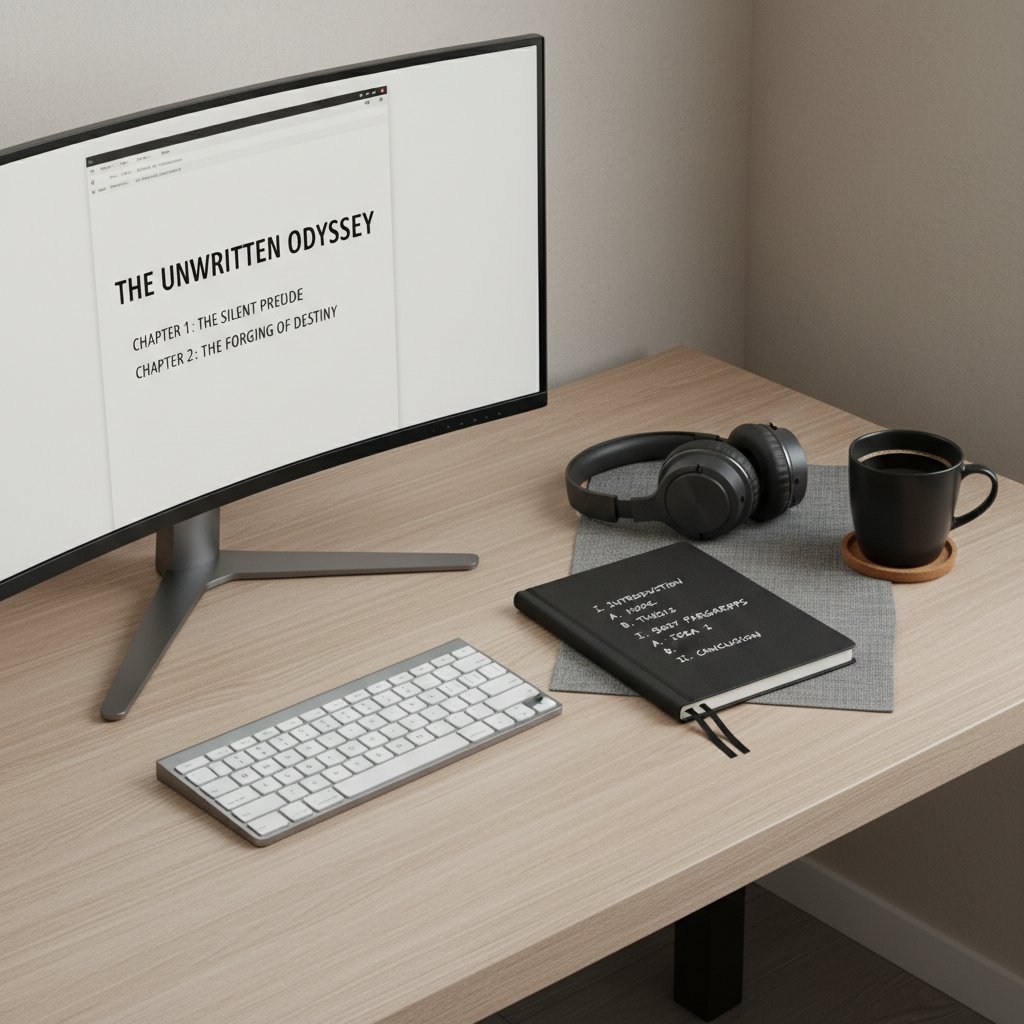
A meticulously organized writing workspace featuring a slim mechanical keyboard, a widescreen monitor displaying a clean document with chapter headings, and a matte-black notebook open to an outline page with precise, legible handwriting. Beside it, a pair of noise-canceling headphones rests on a folded gray linen cloth, and a ceramic mug of black coffee sits on a cork coaster. The desk surface is smooth oak with a subtle grain, set against a neutral, softly textured wall. Cool, diffused daylight from an overcast sky enters from the left, illuminating the setup and casting minimal, soft shadows. Photographed from a slightly elevated three-quarter angle, the composition follows the rule of thirds to emphasize structure and clarity, conveying a disciplined, professional, and tech-savvy writing environment in crisp photographic realism.